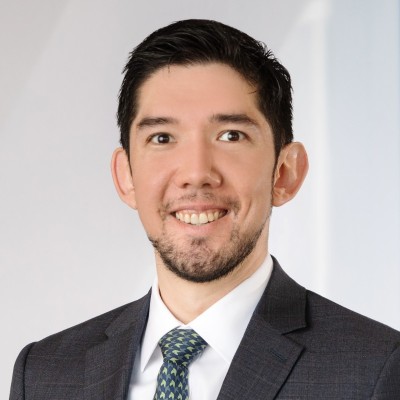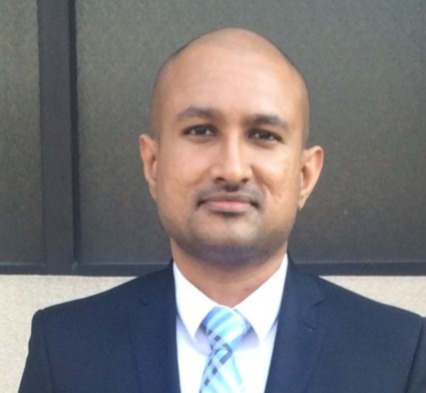
Meet the Templum Team: Roney George, Chief Architect
Roney George joined Templum in 2018 as a software engineer. Eight years later he is Chief Architect, having risen through the company rather than leaving to get promoted. He grew up in India wanting to play cricket, studied applied mathematics rather than computer science, and describes himself as the quietest person at the table. We asked him 12 questions plus a quick-fire round about work, life, and everything in between…
1. The dinner party test: how do you explain what Templum does to someone who has never heard of private markets?
"Private markets are where investments that aren’t listed on public exchanges like Nasdaq or the New York Stock Exchange get bought and sold, such as pre-IPO companies or real estate investment funds. Those markets lack the technology and infrastructure that public markets take for granted. Templum provides that infrastructure and makes it possible for those investments to be traded."
2. What does a Chief Architect actually do?
"A big part of it is designing how Templum’s software systems should work. That can be anything from which database to use to which cloud we should be on. I design a solution, discuss it with the team, take their feedback and iterate until we agree on the approach. Then, as the work gets done, we adjust for anything we missed.
"You’re always weighing trade-offs. You could come up with a very elaborate design, but if it takes too long to build, it isn’t the right one. I always try to find the simplest solution. Most of my work is on back-end systems people never see, but simplicity still matters there, because a simple design is one the whole team can understand and maintain. I think about security improvements, try to fix problems before they occur, and work through issues when they come up: what else they might affect, how quickly they need fixing, and what workaround keeps clients moving in the meantime."
3. You joined Templum in 2018 as a software engineer. What did the company look like then, and what has changed most since?
"It was a much smaller company, very much a startup, and that atmosphere was new to me. I was really excited to join, and it helped me grow a lot, both personally and in my career. Even as a small team, we were able to produce a lot. Back then I wore many hats. Now we have dedicated teams and a more structured approach, and a lot of the focus is on maintaining everything we’ve built, alongside automation and security, while still shipping as much as we can. But the core of the team has stayed the same and so has the drive. We’re more organized than we were, but that startup energy hasn’t gone anywhere."
4. Engineer, then Principal Architect, then Chief Architect, all at Templum. People usually change companies to get promoted. Why did you stay?
"Mostly the people. I feel like I belong here, and I get to work with a lot of brilliant engineers. I’ve also had the chance to work with a lot of new technologies, and to learn about capital markets and fintech, which wasn’t my background. I’m still learning, every day, especially with how fast AI is changing things.
"Ownership is a big part of it too. I’ve had real ownership here, and a lot of hands-on experience, and I think that’s something I thrive on. The changes in my role happened organically."
5. Your degree is in Applied Mathematics and Statistics, not computer science. What did that give you?
"There’s a lot of overlap, and I was interested in computer science anyway. But one thing I’m sure has helped is being comfortable reasoning about how a system will behave, and how it should be architected, without writing a single line of code. I can picture it first and that helps a lot. I think that is something I got from Applied Mathematics and Statistics. The other thing is that because I didn’t have a traditional computer science degree, I had to read and learn a lot on my own. That drove me to keep learning over the years, and I’m still not satisfied. There’s always more to learn."
6. You spent four years at Mediaocean, working on advertising systems for ESPN. How does that compare with building for capital markets?
"In capital markets you have to be extremely precise, because you’re dealing with money. You have to be careful with every penny. Rounding errors are not allowed. The other difference is that you are in a highly regulated environment where data consistency is critical. It was a big, very organized enterprise, and I brought a lot of what I learned there to Templum over the years."
7. What is the biggest misconception people have about engineers?
"That we sit there writing code all day. Most of the job is collaborating with your peers: discussing solutions, doing research, debugging, designing, and talking to stakeholders to understand exactly what they want and communicating it properly. And these days, a fair amount of it is interacting with AI as well."
8. You’re one of the people responsible for security at Templum. What does thinking about that every day do to how you see the rest of the world?
"When most people look at an app or a new feature, they see what it does. I tend to think about what’s behind it, how it works, and what could go wrong. I’m very conscious of data collection, phishing, and how information can leak, so I don’t share personal data anywhere unless it’s absolutely necessary. With what AI can do now, that feels more important than ever. Security is a living, breathing thing. It’s constantly evolving, with new threats and new updates, so it’s never a case of doing it once and being done. We use a lot of tools to help, and the aim is always to find issues before they happen, with alerts in place to flag anything unusual early."
9. You work remotely. How do you design systems with people you never sit next to?
"It takes effort. The main thing is to communicate in the simplest terms possible. What works for me on a call is sharing my screen and writing things down as a few bullet points while we talk. And diagrams. Either we build a diagram together live, or I prepare one beforehand and share it. That helps a lot."
10. How would your closest friends describe Roney away from work?
"Most of my close friends don’t really know what I do. They’re not from a technical background. But I’d say I’m the quietest person at the table, until I drop the perfect remark at the perfect time. Hopefully it’s funny. If not, at least it gives them something to think about."
11. Which talent would you most like to have that you do not?
"Dancing. And from a work point of view, being able to produce really good, beautiful diagrams in less time. They take me a long time."
12. What advice would you give yourself at the start of your career?
"Stop looking for the perfect solution. Engineering is mostly about choosing the right trade-offs."
Quick-fire Questions
13. Movie seen the most? The Matrix
14. Favorite song? Waka Waka by Shakira, because my daughter loves it
15. Dream holiday destination and last foreign trip? Hawaii is my dream destination, and Aruba is my last overseas trip
16. Last book you read? The Phoenix Project by Gene Kim, Kevin Behr and George Spafford
17. Favorite cuisine? Korean
18. What did you want to be as a kid? A cricketer. I grew up in India
19. Best thing about New York? The food
20. Favorite sports personality? Sachin Tendulkar